GUIDANCE: When viewing a digital programme during the concert, we request lowering the brightness of your screen to avoid disturbing fellow audience members. Thank you. We kindly request that you do not print this digital programme, printed programmes will be available to buy at the concert.
EX CATHEDRA
Ex Cathedra Academy of Vocal Music
King’s High School Junior Chamber Choir
Trebles of Warwick School
James Burton conductor
Martha McLorinan mezzo soprano
Lawrence White baritone
Rupert Jeffcoat organ
Eduardo Vassallo cello
Running order:
Vaughan Williams A Vision of Aeroplanes
Vaughan Williams Prayer to the Father of Heaven
Britten Rejoice in the Lamb
Burton St Cuthbert and the Otters
Duruflé Requiem
Scroll down for texts and translations
Programme Note
This afternoon’s concert begins with a remarkable whirlwind of a piece by Ralph Vaughan Williams (1872-1958). Written in 1956, A Vision of Aeroplanes demonstrates that the composer was still pushing his creative boundaries well into his 80s. The piece was premiered by Harold Darke and his St Michael’s Singers at St Michael’s Cornhill in London. Darke described the organ there as “having the ideal English tone,” and Darke gave no fewer than 1800 recitals on the instrument during his 50-year tenure as organist there.
Vaughan Williams’ music is arresting, flamboyant, and highly ambitious; it is a tour de force for organists and singers, which may explain why the piece receives only occasional performances. The composer selected verses from the mind-bending visions described in the first chapter of Ezekiel. The word “aeroplanes” does not appear in the text, of course: the beguiling title of the work seems to have been Vaughan Williams’ own idea.
Prayer to the Father of Heaven could not be more different in musical style. This unaccompanied 1948 motet is painted with restrained, gentle and lyrical compositional strokes which perfectly colour the radiant devotional poem by John Skelton (c.1463-1529). Skelton’s claims to fame included serving as tutor to the young Henry VIII, but his works were not well known in the early twentieth century. A revival by figures such as C.S. Lewis and W.H. Auden led to a resurgence of interest, and Vaughan Williams had set his words in his Five Tudor Portraits in 1936. He composed Prayer to the Father of Heaven for the Oxford Bach Choir, which celebrated Hubert Parry’s centenary with a special concert in March 1948. The score has a lengthy and personal inscription at the beginning: Dedicated to the memory of my master HUBERT PARRY, not as an attempt palely to reflect his incomparable art, but in the hope that he would have found in this motet (to use his own words) “something characteristic”.
Early in his career, Christopher Smart (1722-1771) was a well-regarded member of the literary elite. But by 1757, a commission for lunacy was taken out against him, and he was admitted to St Luke’s Asylum, Bethnal Green. During six years of confinement there, he wrote his feverishly fervent poem Jubilate Agno, which remained unpublished until 1939. W.H. Auden introduced Benjamin Britten to the poem, and the composer turned to it in 1943 when invited by the Reverend Walter Hussey to write a piece for the 50th anniversary of the consecration of St Matthew’s, Northampton. Hussey was particularly interested in bringing the church’s work closer to the arts: Finzi’s Lo, the Full, Final Sacrifice and Bernstein’s Chichester Psalms join Britten’s Rejoice in the Lamb on the impressive list of Hussey’s commissions.
Britten wrote to Hussey: “I am afraid I have gone ahead and used a bit about the cat Jeoffrey, but I don’t see how it could hurt anyone. He is such a nice cat.” Britten’s accompanying music for perhaps Britain’s most famous literary cat is charming and whimsical, and it serves as the first of three brief but characterful solo arias in the central section of this cantata-like anthem. The piece opens with the choir in unison on middle C offering a very soft call to praise. A boisterous, mixed-meter dance follows, describing Old Testament figures and their animals praising God. A soft Hallelujah rounds off the first section with a Purcellian deftness of musical touch. After the tenor’s ‘flower’ aria, the anthem takes a much darker turn. Britten displays some of the compositional intensity which was to surface in his opera Peter Grimes two years later. A brief bass solo recitative ushers in a joyous vivace: musical instruments and the mere rhyming of words show the glory of God: “lawn, fawn, moon, boon, ring, string”! The sparkling playfulness and brilliance slowly dissipates, and a repeat of the soft Hallelujah brings the work to an inspired close.
St Cuthbert and the Otters is scored for an unaccompanied SATB choir and an additional two-part children’s choir. The piece relates an episode in the life of St Cuthbert of Lindisfarne when he was observed leaving his monastery at dusk and then praying all night whilst standing alone in the sea. The music begins with a choral recitative for the SATB choir, and a solo baritone (as Cuthbert) then sings the Old English words of Caedman’s Hymn to a tune which I created as a hybrid of Gregorian chant and modal folk melody. Librettist and medieval scholar Venetia Bridges proposes that Cuthbert may have known these words: the hymn may be the oldest surviving poem in English and dates from the late 600s, around the same period when Cuthbert was alive. Faster music accompanies the children’s voices as they introduce the two sea otters tumbling and turning energetically through the water towards Cuthbert. This music then combines with Caedman’s Hymn which the otters sing in folk-like three-part harmony with Cuthbert. As the dawn breaks, a miraculous interaction occurs when the otters are observed drying Cuthbert’s feet with their fur: the otters now sing the hymn in canon with Cuthbert, and their song is accompanied by a chorale-like setting of words from the Benedicite. The piece was commissioned by Cantata Dramatica, and I conducted the premiere a few yards away from St Cuthbert’s final resting place in Durham Cathedral on 9th February 2019 as part of the North East Festival of Youth Choirs.
French composer Maurice Duruflé (1902-1986) is well known for his perfectionism, and he published a tantalisingly small number of pieces: for choir, he left just one mass, four unaccompanied motets, a Lord’s Prayer and his 1947 Requiem.
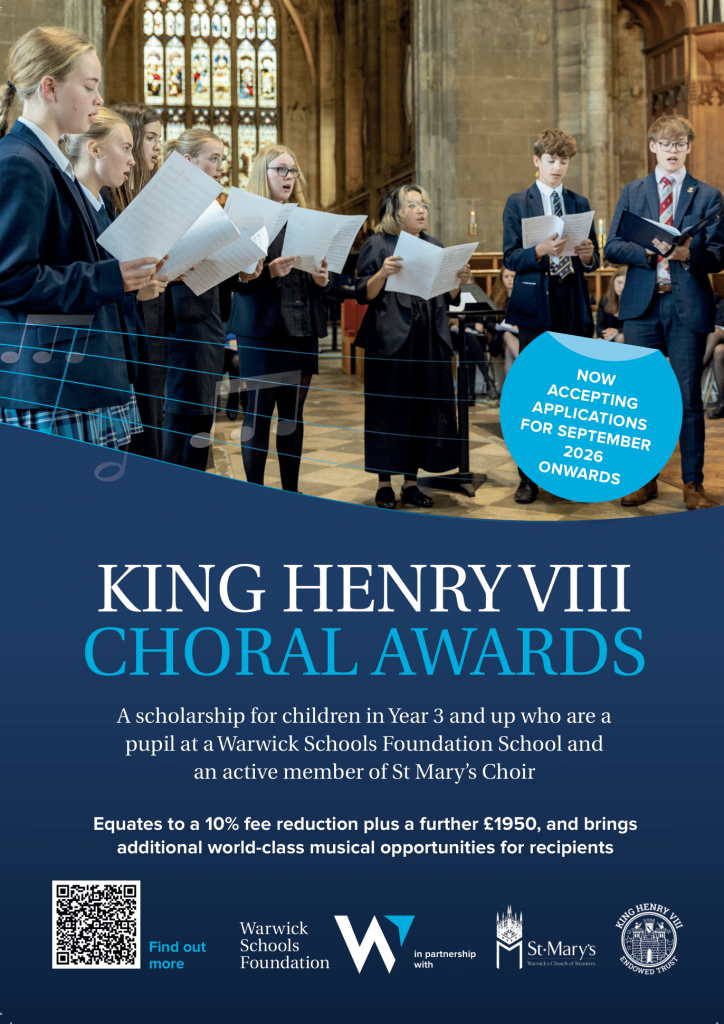
Composed originally with a large orchestral accompaniment, Duruflé made an organ reduction of the Requiem, and it was this version that was published first and has become the most performed. Even if Duruflé’s original intentions were orchestral, the re-imagining for organ is highly effective. The choral parts remain unchanged, and the sole survivor from the orchestra is the solo cello in the Pie Jesu. In today’s performance, we honour the composer’s indication that he preferred to hear children’s voices sing phrases in movements III, VIII and IX.
By the time he began work on the Requiem, Duruflé was one of France’s leading organists: he was Vierne’s assistant at Notre Dame before serving as organist at St-Étienne-du-Mont from 1930 to 1975; he had also played the premiere of Poulenc’s Organ Concerto in 1938. From a young age, as a chorister at Rouen Cathedral, Duruflé had been steeped in the traditions of plainsong, and his Requiem largely follows the contours of the Gregorian chants for the Mass of the Dead. Duruflé’s ravishingly beautiful harmonies illuminate these ancient melodies throughout, and it is no wonder that he served for many years as Professor of Harmony at the Paris Conservatoire.
A pensive ostinato accompanies the familiar Requiem chant presented at the work’s opening. The chant returns as a two-part organ canon at the recapitulation, and the choir opens up with freer expression. The Kyrie follows without a break with four-part counterpoint in the choir; a fifth cantus firmus voice emerges at a slower speed in the accompaniment. The third movement responds to the text rhapsodically with dramatic musical contrasts, and a baritone soloist enters with the barest of accompaniments. The Sanctus grows with processional anticipation, and the overwhelming magnificence of the Hosanna subsides into a hushed Benedictus which functions as a brief recapitulation. The gentle intensity of the Pie Jesu is followed by a free-flowing Agnus Dei with each section of the choir featured in turn. Lux aeterna alternates instrumental passages with soprano responses. The choir accompanies two hymn-like passages in the organ on a single reciting note. Movement VIII mirrors movement III with similarly varied musical gestures: a foreboding opening melody, a fearful baritone solo, a devastating Dies Irae, an interjection from angelic upper voices, and a return to the opening with all voices in a muted unison. The final movement is musical balm: after the upper voices sing their depiction of paradise, Duruflé’s final choral chords open out in hushed harmonic wonderment, and a high organ melody descants over the top of the score, almost like an angelic signature at the end of the piece.
Programme notes by James Burton, 2025.
Performers
EX CATHEDRA
Ex Cathedra Academy of Vocal Music
King’s High Junior Chamber Choir
Trebles of Warwick School
James Burton conductor
Rupert Jeffcoat organ
Martha McLorinan mezzo soprano
Lawrence White baritone
Eduardo Vassallo organ
Soprano: Marianne Ayling, Alexandra Burstow***, Evelyn Byford***, Naomi Hedges, Sophie Henderson~, Joy Krishnamoorthy, Margaret Langford, Margaret Lingas, Alice Madden^, Imogen Russell, Rachel Snape, Sally Spencer, Katie Trethewey,
Alto: Sarah Colgan, Georgi Davies**, Steph Garrett, Martin Hodgkinson, Hannah Komedera^, Martha McLorinan, Lucy Ormrod*, Katy Raines-Rami, Nicola Starkie, Laura Toomey~
Tenor: Isaac Boulter, Declan Costello, Steve Davis, Tom Hawkey-Soar~, Dan Marles*, Andrew Morton*, Jeremy Reid, James Robinson, Iain Sloan
Bass: Robert Asher, Jeremy Burrows, John Cotterill, Ryan Evans^, Richard Green, Matt Pandya*, Bill Robinson, David Smith, Barney Stevens, William Swinnerton***, Josh Thompson***, Lawrence White
* denotes Ex Cathedra Graduate Scholar
** denotes Ex Cathedra Student Scholar
*** denotes Royal Birmingham Conservatoire Student Scholar
^ denotes University of Birmingham Student Scholar
~ denotes Ex Cathedra Enhanced Scholar
Organ: Rupert Jeffcoat
Cello: Eduardo Vassallo
Follow us on social media!
Facebook: facebook.com/excathedra
Instagram: instagram.com/excathedra_choir or @excathedra_choir
X: x.com/excathedrachoir or @excathedrachoir
Texts and Translations
A Vision of Aeroplanes – Ralph Vaughan Williams (1872-1958)
Text: Ezekiel 1
Soprano solo: Margaret Lingas
I looked, and, behold, a whirlwind came out of the north, a great cloud, and a fire infolding itself, and a brightness was about it, and out of the midst thereof as the colour of amber, out of the midst of the fire.
Also out of the midst thereof came the likeness of four living creatures. And this was their appearance; they had the likeness of a man. And every one had four faces, and every one had four wings…their wings were joined one to another; they turned not when they went; they went every one straight forward; whither the spirit was to go, they went; and they turned not when they went… Their appearence was like burning coals of fire and like the appearance of lamps; it went up and down among the living creatures;
and the fire was bright, and out of the fire went forth lightning. And the living creatures ran and returned as the appearance of a flash of lightning.
Now as I beheld the living creatures, behold one wheel upon the earth by the living creatures with his four faces…Their appearance and their work was, as it were, a wheel in the middle of a wheel. When they went, they went upon their four sides: and they turned not when they went. As for their rings, they were so high that they were dreadful: and their rings were full of eyes round about them four. And when the living creatures went, the wheels went by them: and when the living creatures were lifted up from
the earth, the wheels were lifted up from the earth, the wheels were lifted up,… when those went, these went; and when those stood, these stood; and when they were lifted up from the earth, the wheels were lifted up over against them: for the spirit of the living creature was in the wheels…
And when they went, I heard the noise of their wings, like the noise of great waters, as the voice of the Almighty…when they stood, they let down their wings and there was a voice from the firmament that was over their heads, when they stood, and had let down their wings.
And above the firmament that was over their heads was the likeness of a throne, as the appearance of a sapphire stone; and upon the likeness of the throne was the likeness as the appearance of a man… This was the appearance of the likeness of the glory of the Lord. And when I saw it I fell upon my face.
Prayer to the Father of Heaven Ralph Vaughan Williams
Text: John Skelton (c.1463-1529)
O radiant Luminary of light interminable,
Celestial Father, potential God of might.
Of heaven and earth, O Lord incomparable,
Of all perfections the Essential most Perfite!
O Maker of mankind, that formed day and night,
Whose power imperial comprehendeth every place!
Mine heart, my mind, my thought, my whole delight
Is, after this life, to see Thy glorious Face.
Whose magnificence is incomprehensible,
All arguments of reason which far doth exceed;
Whose Deity doubtless is indivisible,
From whom all goodness and virtue doth proceed:
Of thy support all creatures have need;
Assist me, good Lord, and grant me of thy grace
To live to thy pleasure in word, thought and deed,
And, after this life, to see thy glorious Face.
Rejoice in the Lamb Benjamin Britten (1913-1976)
Text: Christopher Smart (1722-1771)
Rejoice in God, O ye Tongues; give the glory to the Lord, and the Lamb.
Nations, and languages, and every Creature, in which is the breath of Life.
Let man and beast appear before him, and magnify his name together.
Let Nimrod, the mighty hunter, bind a Leopard to the altar, and consecrate his spear to the Lord.
Let Ishmail dedicate a Tyger, and give praise for the liberty in which the Lord has let him at large.
Let Balaam appear with an Ass, and bless the Lord his people and his creatures for a reward eternal.
Let Daniel come forth with a Lion, and praise God with all his might through faith in Christ Jesus.
Let Ithamar minister with a Chamois, and bless the name of Him, that cloatheth the naked.
Let Jakim with the Satyr bless God in the dance.
Let David bless with the Bear—The beginning of victory to the Lord—to the Lord the perfection of excellence—Hallelujah from the heart of God, and from the hand of the artist inimitable, and from the echo of the heavenly harp in sweetness magnifical and mighty.
Soprano solo: Imogen Russell
For I will consider my Cat Jeoffry.
For he is the servant of the Living God, duly and daily serving him.
For at the first glance of the glory of God in the East he worships in his way.
For this is done by wreathing his body seven times round with elegant quickness.
For he knows that God is his saviour.
For God has blessed him in the variety of his movements.
For there is nothing sweeter than his peace when at rest.
For I am possessed of a cat, surpassing in beauty, from whom I take occasion to bless Almighty God.
Alto solo: Martha McLorinan
For the Mouse is a creature of great personal valour.
For—this is a true case—Cat takes female mouse—male mouse will not depart,
but stands threat’ning and daring.
…..If you will let her go, I will engage you, as prodigious a creature as you are.
For the Mouse is a creature of great personal valour.
For the Mouse is of an hospitable disposition.
Tenor solo: James Robinson
For the flowers are great blessings.
For the flowers have their angels even the words of God’s Creation.
For the flower glorifies God and the root parries the adversary.
For there is a language of flowers.
For flowers are peculiarly the poetry of Christ.
For I am under the same accusation with my Saviour—
For they said, he is besides himself.
For the officers of the peace are at variance with me, and the watchman smites me with his staff.
For Silly fellow! Silly fellow! is against me and belongeth neither to me nor to my family.
For I am in twelve HARDSHIPS, but he that was born of a virgin shall deliver me out of all.
Bass solo: Lawrence White
For H is a spirit and therefore he is God.
For K is king and therefore he is God.
For L is love and therefore he is God.
For M is musick and therefore he is God.
For the instruments are by their rhimes.
For the Shawm rhimes are lawn fawn moon boon and the like.
For the harp rhimes are sing ring string and the like.
For the cymbal rhimes are bell well toll soul and the like.
For the flute rhimes are tooth youth suit mute and the like.
For the Bassoon rhimes are pass class and the like.
For the dulcimer rhimes are grace place beat heat and the like.
For the Clarinet rhimes are clean seen and the like.
For the trumpet rhimes are sound bound soar more and the like.
For the TRUMPET of God is a blessed intelligence and so are all the instruments in HEAVEN.
For GOD the father Almighty plays upon the HARP of stupendous magnitude and melody.
For at that time malevolence ceases and the devils themselves are at peace.
For this time is perceptible to man by a remarkable stillness and serenity of soul.
Hallelujah from the heart of God, and from the hand of the artist inimitable,
and from the echo of the heavenly harp in sweetness magnifical and mighty.
St Cuthbert and the Otters James Burton (b. 1974)
Text: Venetia Bridges
Soprano duet: Sophie Henderson, Alice Madden
Baritone solo: Matthew Pandya
Cuthbert, chosen by God,
performed holy signs and miracles for his people,
so that they might have true faith in Christ Jesus.
Yet his holiness was a burden as well as a joy.
One night, when his spirit was worn
and his body was tired,
he walked alone on the seashore,
and he sang to the sound of the waves:
Nu sculon herian heofonrices Weard,
Metodes mihte and his modgeþanc,
weorc Wuldorfæder, swa he wundra gehwæs
ece Dryhten, or onstealde.
As he sang, the stars shone brightly over the sea,
and the moon rose.
Rapt in prayer, he walked out into the shining water,
and raised his arms to the sky in wonder:
He ærest scop eorþan bearnum
heofon to hrofe halig Scieppend.
þa middangeard mancynnes Weard
ece Dryhten, æfter teode
firum foldan Frea ælmihtig. *
And all through the night,
as the tide came in
and the wind grew strong
and the clouds shrouded the moon
and the darkness deepened,
he sang on, unaware of wind, wave or withering cold.
Nu sculon herian heofonrices Weard,
Metodes mihte and his modgeþanc,
Two sea otters,
hearing his prayer over the waters,
slipped swiftly to him,
tumbling and turning for joy,
God-guided by his song;
and their threefold voices lifted into the night:
Nu sculon herian heofonrices Weard,
Metodes mihte and his modgeþanc,
weorc Wuldorfæder, swa he wundra gehwæs
ece Dryhten, or onstealde.
When the dawn had broken
and the Daystar had appeared,
Cuthbert came out of the water,
transfixed by prayer,
and pierced by cold.
Taking pity on him, the otters dried his feet with their fur,
and they warmed him with their breath,
as if they were the very breath of God.
And before they returned to their daily work
Cuthbert gave them his blessing,
And they sang once more their song of praise:
He ærest scop eorþan bearnum
heofon to hrofe halig Scieppend.
þa middangeard mancynnes Weard
ece Dryhten, æfter teode
firum foldan Frea ælmihtig.
O all ye Works of the Lord, bless ye the Lord: praise him, and magnify him for ever.
*Now we must praise the Guardian of the kingdom of heaven,/ the power of God and his conception,/ the work of the Father of Glory, for He,/ the eternal Lord, established the beginning of every marvellous thing./ He, holy Creator, first created/ heaven as a roof for children of men./ Then the Guardian of mankind,/ eternal Lord, almighty Master,/ afterwards adorned the earth for living beings.
Requiem – Maurice Duruflé (1902-1986)
Mezzo soprano solo: Martha McLorinan
Baritone solo: Lawrence White
Cello: Eduardo Vassallo
I Introit
Requiem aeternam dona eis, Domine,
Rest eternal grant to them Lord,
et lux perpetua luceat eis.
and let light perpetual shine upon them.
Te decet hymnus, Deus, in Sion,
Thou, O God, art to be praised in Sion:
et tibi reddetur votum in Jerusalem.
to thee the vow shall be performed in Jerusalem.
exaudi orationem meam,
hear my prayer;
ad te omnis caro veniet.
to Thee shall all flesh come.
II Kyrie
Kyrie eleison.
Lord have mercy.
Christe eleison.
Christ have mercy.
Kyrie eleison.
Lord have mercy.
III Domine Jesu Christe
O Domine Jesu Christe, Rex gloriae,
O Lord Jesus Christ, King of Glory,
libera animas omnium fidelium defunctorum
Liberate the souls of all the faithful departed
de poenis inferni et de profundo lacu:
from eternal torment and from the fathomless waters:
libera eas de ore leonis, ne absorbeat eas tartarus;
free them from the jaws of the lion, let them not be
ne cadant in obscurum.
swallowed up by hell, nor fall into darkness.
Sed signifer sanctus Michael representet
But let Saint Michael, the standard-bearer,
eas in lucem sanctam,
bring them into the holy light,
Quam olim Abrahae promisisti et semini eius.
Which once thou promised to Abraham and
to his seed.
Hostias et preces tibi Domine,
Sacrifices and prayers of praise O Lord
laudis offerimus:
we offer to thee;
tu suscipe pro animabus illis,
receive them on behalf of those souls
quarum hodie memoriam facimus.
we commemorate this day.
Fac eas, Domine, de morte transire ad vitam,
Grant them, Lord, deliverance from death to life,
quam olim Abrahae promisisti et semini eius.
which once thou promised to Abraham and his seed.
IV Sanctus
Sanctus, sanctus, sanctus
Holy, holy, holy
Dominus Deus Sabaoth.
Lord God of Sabaoth.
Pleni sunt coeli et terra gloria tua.
Heaven and earth are full of thy glory.
Hosanna in excelsis.
Hosanna in the highest.
Benedictus qui venit in nomine Domini.
Blessed is he who comes in the name of the Lord.
Hosanna in excelsis.
Hosanna in the highest.
V Pie Jesu
Pie Jesu, Domine
Merciful Lord Jesus,
dona eis requiem,
grant them rest,
sempiternam requiem.
everlasting rest.
VI Agnus Dei
Agnus Dei, qui tollis peccata mundi,
O Lamb of God who takest away the sins of the world,
dona eis requiem.
grant them rest.
Agnus Dei, qui tollis peccata mundi,
O Lamb of God who takest away the sins of the world,
dona eis requiem, sempiternam requiem.
grant them everlasting rest.
VII Lux aeterna
Lux aeterna luceat eis, Domine.
Let perpetual light shine upon them, Lord.
Cum sanctis tuis in aeternum, quia pius es.
With thy saints in eternity because thou art Merciful.
Requiem aeternam dona eis, Domine,
Rest eternal grant unto them, Lord,
et lux perpetua luceat eis.
and let perpetual light shine upon them.
VIII Libera me
Libera me Domine de morte aeterna,
Deliver me, O Lord, from eternal death
in die illa tremenda,
in that dreadful day,
quando coeli movendi sunt et terra;
when the heavens and the earth shall quake,
dum veneris judicare saeculum per ignem.
and thou shalt come to judge the ages through fire.
Tremens factus sum ego et timeo
I am made to tremble and I fear
dum discussio venerit atque ventura ira.
when judgement and wrath will come and dash all to pieces.
Dies illa, dies irae, calamitatis et miseriae,
That day, day of wrath, disaster and distress:
dies magna et amara valde,
greatest and most bitter day,
dum veneris judicare saeculum per ignem.
when thou shalt come to judge the ages through fire.
Requiem aeternam dona eis Domine,
Rest eternal grant unto them, Lord
et lux perpetua luceat eis.
and let perpetual light shine upon them.
IX In Paradisum
In Paradisum deducant te Angeli:
May the angels lead you into Paradise.
In tuo adventu suscipiant te Martyres
May the martyrs receive you on your arrival
et perducant te in civitatem sanctam Jerusalem.
and lead you into the holy city of Jerusalem.
Chorus Angelorum te suscipiat
May a choir of angels welcome you
et cum Lazaro quondam paupere
and with Lazarus who once was poor,
aeternam habeas requiem.
may you have eternal rest.
Meet the… musician
In this programme, we invite you to meet Naomi Hedges.
Be an Angel…
We believe everyone should have the opportunity to access extraordinary choral music and feel the wonderful benefits of singing, which is why we share our love of singing with as many people as possible through concerts, new commissions, recordings, training choirs for young singers, Scholarships, and community projects that reach 90,000 children and adults every year.
Your support is vital in helping us achieve our charitable mission to share great choral music with as many people as possible.
Our work is only possible thanks to the generous support of the many people listed in our Host of Angels. I should be delighted and enormously grateful if you would consider joining them and becoming a valued member of supporter programme – be an Angel and give the gift of singing today. Find out how by following this link.