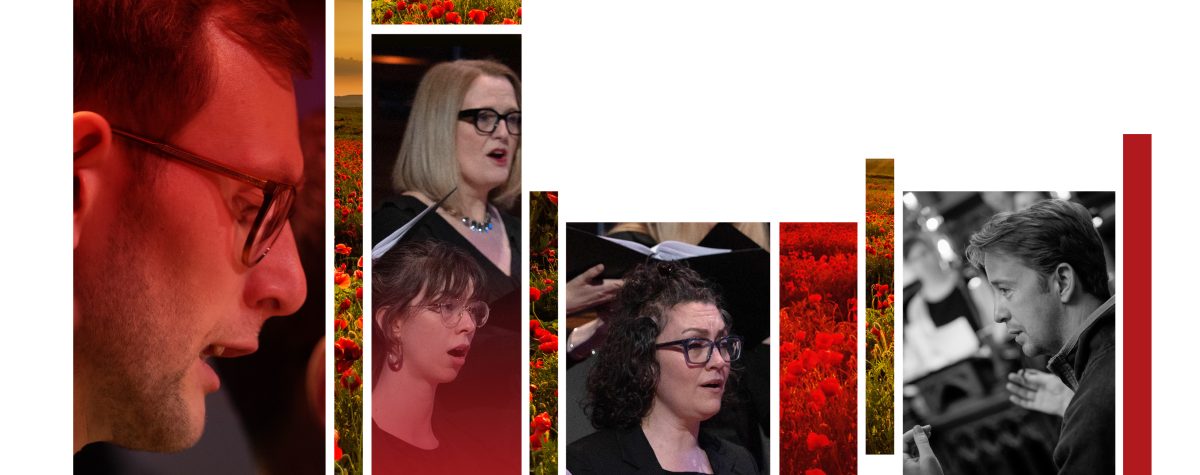
GUIDANCE: When viewing a digital programme during the concert, we request lowering the brightness of your screen to avoid disturbing fellow audience members. Thank you. We kindly request that you do not print this digital programme, printed programmes will be available to buy at the concert.
Sunday 07 December 2025
Town Hall, Birmingham, 4pm
EX CATHEDRA
Ex Cathedra Baroque Orchestra
Jeffrey Skidmore conductor
James Robinson Evangelist
Margaret Lingas, Katie Trethewey soprano
Gabriella Liandu, Martha McLorinan, Laura Toomey alto
Daniel Marles tenor
Oliver Barker, Lawrence White bass
Running order:
Christmas Oratorio
J.S. Bach (1685-1750)
Part I For the First Day of Christmas
Part II For the Second Day of Christmas
Part III For the Third Day of Christmas
Interval (30 minutes)
Part IV For New Year’s Day
Part V For the first Sunday after New Year
Part VI For the Feast of Epiphany
Programme Note
Bach’s Christmas Oratorio is perhaps the most confident and optimistic statement of Christian belief in the whole choral repertoire. The libretto makes use of the 33 short verses from the Gospels of Luke and Matthew which contain the meagre information relating to the Nativity. As in the Passion oratorios a tenor Evangelist sings the narration in an expressive recitative style. However, each detail of the story is commented upon and enriched in a way that is thoughtful and inspiring. It says all that needs to be said about Christmas. These contemplative passages take the form of choruses, chorales and arias. The whole work is a call to action, from the exhilarating opening chorus with its unison shout for joy at the news of Christ’s birth (the sopranos have a two octave range in their first 8 bars), to the triumph of good over evil in the final orchestral chorale prelude, with its concerto-like trumpet obbligato.
The work is richly scored for strings, flutes, oboes and bassoon, with three trumpets and timpani added in parts 1, 3 and 6; two oboe d’amore and two oboe da caccia in the pastoral second part; and two horns in part 4. The chorales are among Bach’s most ardent and imaginatively harmonised and the choruses have a vitality and energy in keeping with secular birthday celebrations. The arias explore a wide range of human experiences: preparation, pride, love, the intimacy of motherhood, eagerness, joy and contentment. The Christmas Oratorio is a wonderful work and it is surprising that it has not achieved the same popularity in Great Britain as it has on the continent.
Bach’s use of parody techniques is another interesting feature of the Christmas Oratorio. Bach and his librettist Christian Friedrich Henrici, also known as Picander, added new sacred words to mainly secular material, which Bach had written for noble birthdays and anniversaries early in 1734. Movements 1, 4, 8, 15, 19, 24, 29, 31 and most of Part Six are contrafacta! The effect of this transformation is remarkable. In the 17th and 18th centuries this in no way diminished the validity of the work. It was, after all, Martin Luther who asked why should the devil have all the good tunes!
The Christmas Oratorio is really a collection of six well-balanced cantatas, although Bach himself described it as an oratorio. Each includes narrative verses in the form of recitative, three or four choruses or chorales and two arias. It was written for the six feast days in the twelve days of Christmas 1734-5 and was performed in the two major churches in Leipzig – St Nicholas and St Thomas. It was never intended that all six should be performed as a single work, although there is unity of theme, key and orchestration.
Note by Jeffrey Skidmore, November 2025
Performers
Soprano: Marianne Ayling, Alexandra Burstow***, Evelyn Byford*** Ros Crouch, Naomi Hedges, Sophie Henderson, Margaret Lingas, Alice Madden^, Shirley Scott, Sally Spencer, Katie Trethewey,
Alto: Georgi Davies, Martin Hodgkinson, Hannah Komedera^, Gabriella Liandu, Martha McLorinan, Andrew Round, Laura Toomey~
Tenor: Steve Davis, Richard Jackson, Dan Marles*, Andrew Morton*, Iain Sloan, James Robinson
Bass: Robert Asher, Oliver Barker, Jeremy Burrows, Ryan Evans^, Richard Green, Matt Pandya*, Lucas Rebato***, Bill Robinson, Peter Scurlock, William Swinnerton***, Lawrence White
* denotes Ex Cathedra Graduate Scholar
** denotes Ex Cathedra Student Scholar
*** denotes Royal Birmingham Conservatoire Student Scholar
^ denotes University of Birmingham Student Scholar
~ denotes Ex Cathedra Enhanced Scholar
Flute: Rachel Brown, Christine Garratt
Oboe: Gail Hennessy, Mark Radcliffe
Oboe da Caccia: Jane Downer, Andrés Villalobos Lépiz
Bassoon: Zoe Shevlin
Horn: Anneke Scott, Martin Lawrence
Trumpet: Peter Mankarious, Paul Bosworth, Ross Brown
Timpani: Ben Fullbrook
Violin 1: Lucy Russell (leader), Iona Davies, Liz MacCarthy, Ellen Bundy
Violin 2: Miki Takahashi, Joanna Lawrence, Fiona Duncan
Viola: Alan George, Kate Fawcett
Cello: Andrew Skidmore, Imogen Seth-Smith
Double bass: Carina Cosgrave
Organ: Silas Wollston
Follow us on social media!
Facebook: facebook.com/excathedra
Instagram: instagram.com/excathedra_choir or @excathedra_choir
X: x.com/excathedrachoir or @excathedrachoir
Meet the… musician
In this programme, we invite you to meet Kate Fawcett.
Be an Angel…
We believe everyone should have the opportunity to access extraordinary choral music and feel the wonderful benefits of singing, which is why we share our love of singing with as many people as possible through concerts, new commissions, recordings, training choirs for young singers, Scholarships, and community projects that reach 90,000 children and adults every year.
Your support is vital in helping us achieve our charitable mission to share great choral music with as many people as possible.
Our work is only possible thanks to the generous support of the many people listed in our Host of Angels. I should be delighted and enormously grateful if you would consider joining them and becoming a valued member of supporter programme – be an Angel and give the gift of singing today. Find out how by following this link.